From an inexpensive handheld device to our own echo capture and display.
Real echo capture · boat installation in developmentUpdated: 1 November 2026
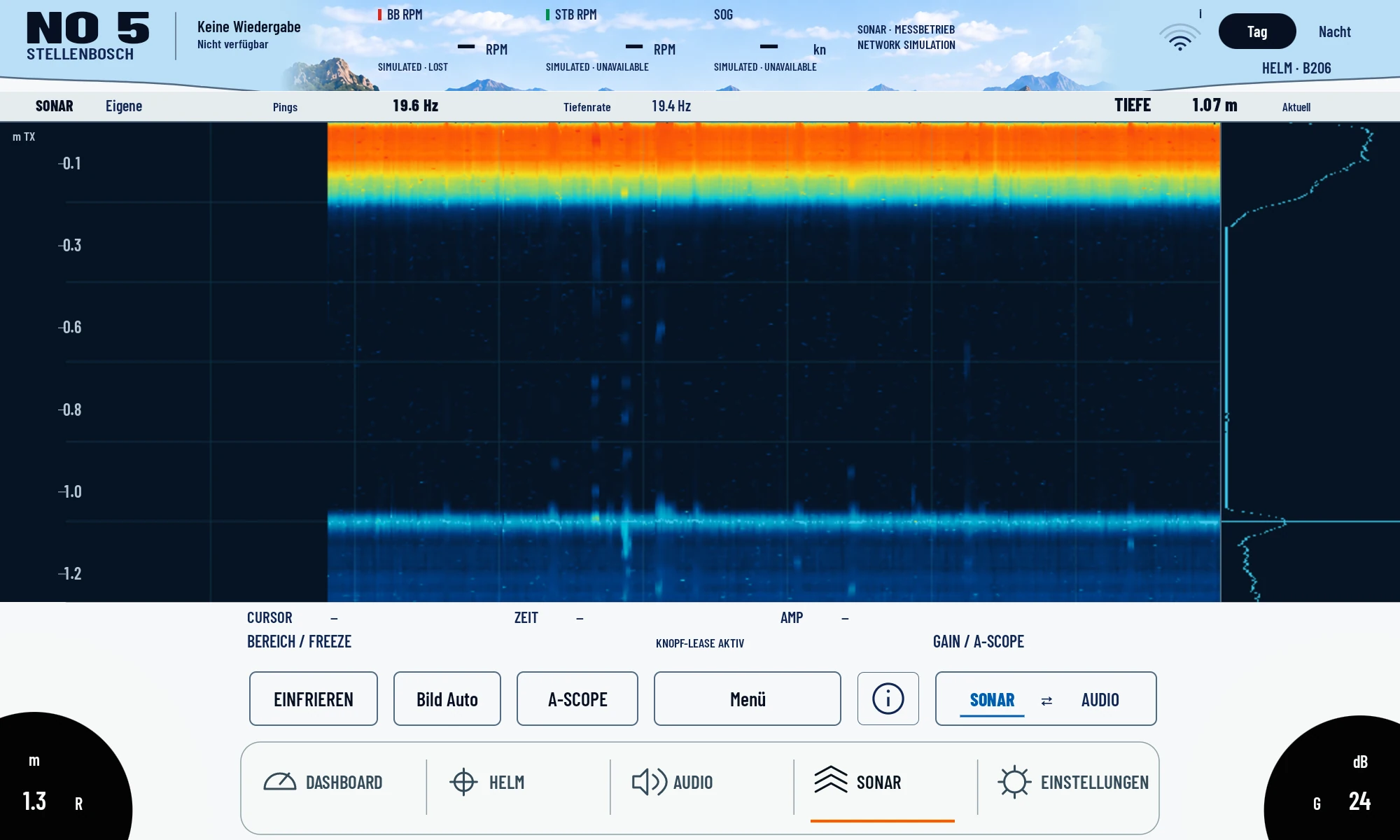
Fresh device capture: live own-source echoes, confirmed displayed depth 1.07 m and A-scope. Test setup; no absolute calibration or boat acceptance.HELM 206 · 0.8.134-sonar-start-depth-controls · Lumina K706 · Android 10 · 2000 × 1200
01 / STARTING POINT
What we wanted to solve.
The Venterior handheld could display depth. We wanted the echoes themselves: more frequent measurements, retained raw data and our own display. Electronics, timing and processing had to work together.
WHAT THIS COMPONENT MAKES POSSIBLE
The practical difference.
Raw signals from the inexpensive fishfinder examined become visible echoes and shareable depth values. Display and acquisition can develop independently.
Our ping control, Pico acquisition and processing open up the Venterior. The documented trial reached a maximum of 19.6 usable measurements/s over a five-second window. Temperature is a separate measurement and calibration path and has not yet been fully demonstrated.
A Pico captures signals from the existing device. Own transmissions, physical markers and raw samples are correlated. Sonard processes the measurements and passes them through the gateway to the display.
Usable ping rate depends on depth and the required receive window. We raised the acquisition rate in stages, rather than merely increasing display refresh.
Raw data and failed trials remain part of the development record. Filtering, depth tracking and display were developed separately.
03 / RESULTS
What exists today.
The documented 600-second trial on 16 October 2026 contains 8,807 own starts with physical marker and raw-data correlation.
Rolling five-second windows measured 6.4 to 19.6 usable measurements per second; the run average was 14.17. This is not a constant 20 Hz promise.
HELM displayed the genuinely acquired history during that trial. Later depth and display integration has separate records.
Images show the development revisions identified in their captions. Today’s source may be newer than an existing image.
NATIVE DEVICE CAPTURE32 s · 1×
Own-source echoes. On the real display.
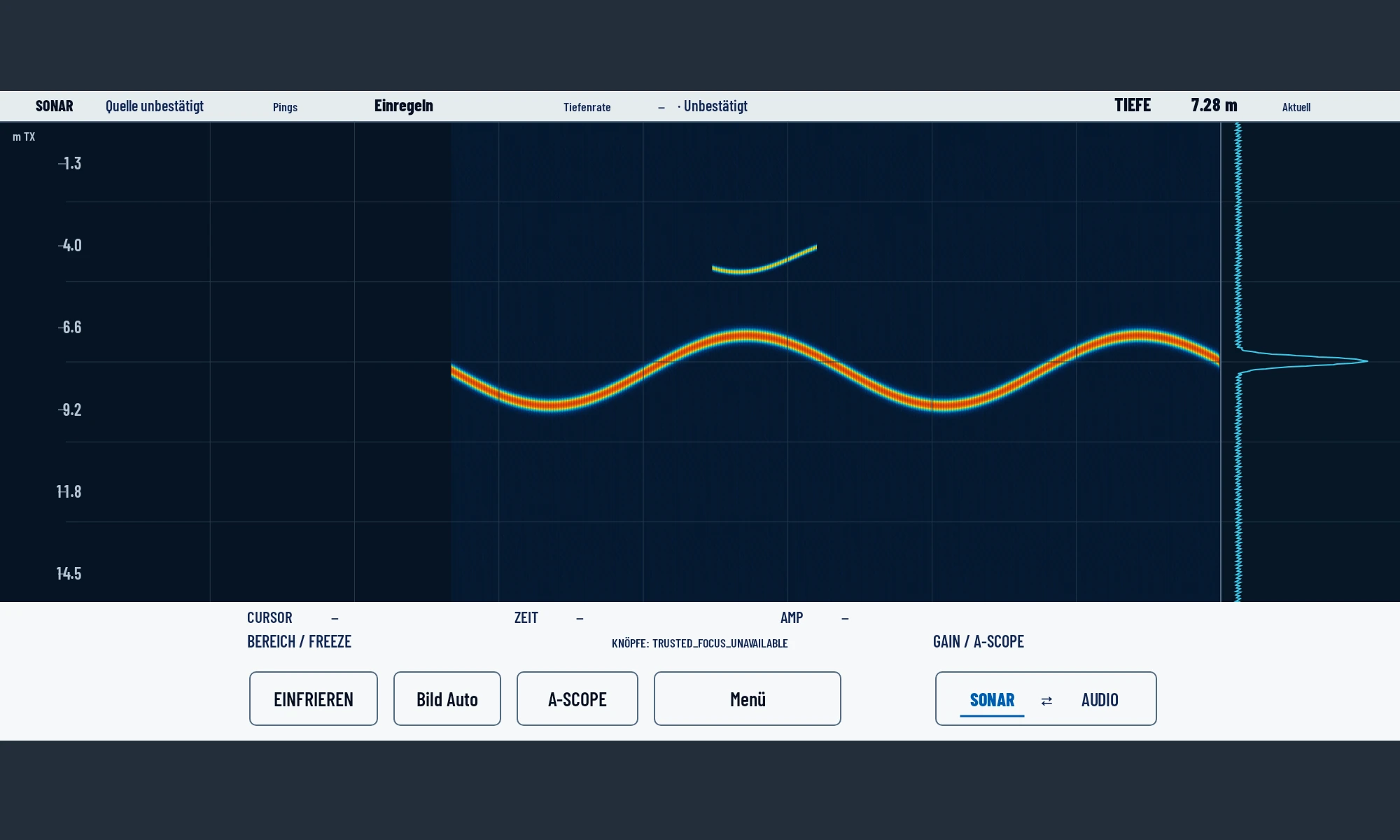
32 seconds from the native HELM app on a physical Lumina: the live echogram and A-scope on the existing test setup. The A-scope view is hidden and shown again.
32 seconds from the native HELM app on a physical Lumina: the live echogram and A-scope on the existing test setup. The A-scope view is hidden and shown again.
Test setup, not acceptance aboard a boat or absolute depth calibration. Temperature is not shown. Other header telemetry is labelled as simulated. Recording frame rate is not an app or GPU measurement.
Direct captures of the installed apps. Captions identify device, version and data source; a displayed measurement is only as strong as the source described there.
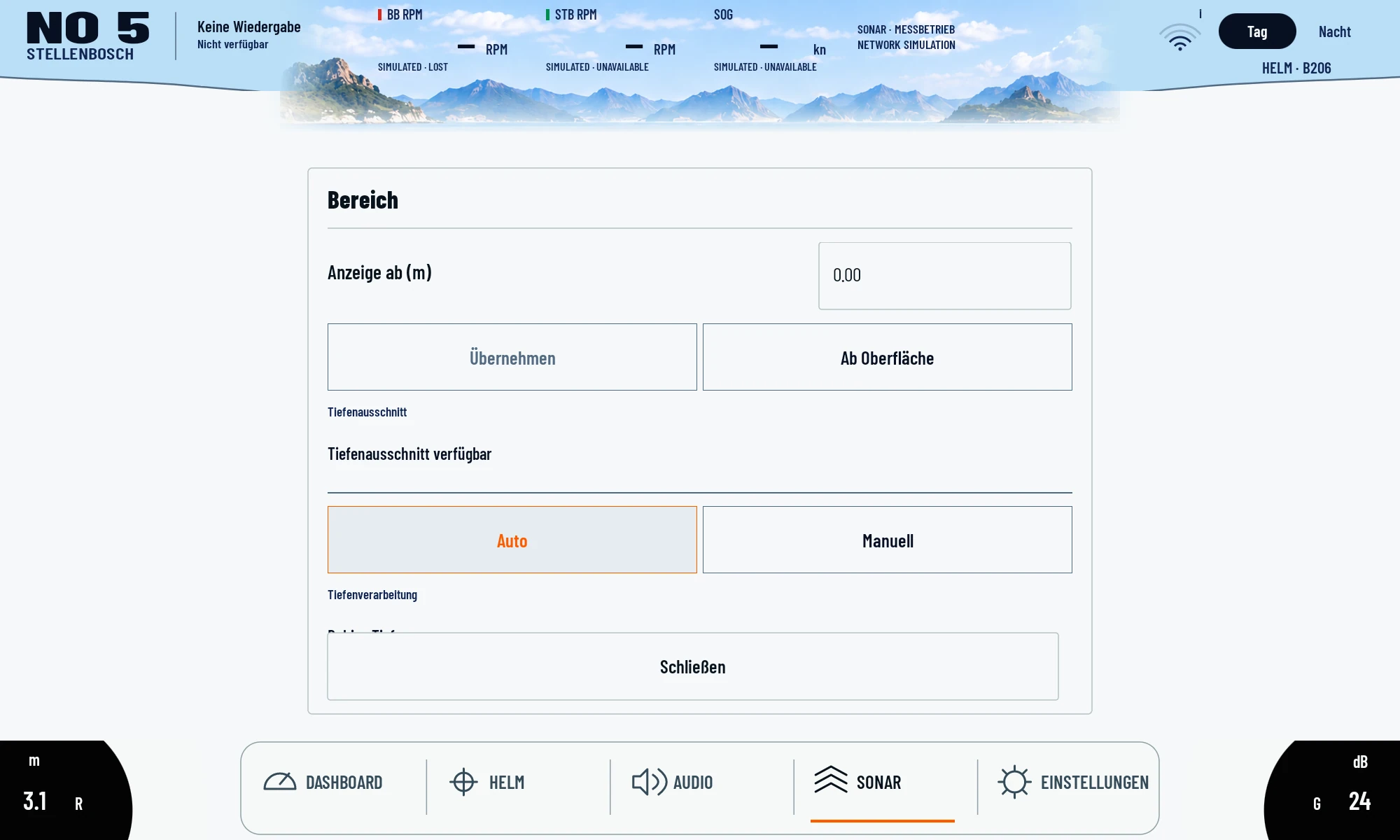
Current native range dialog with existing automatic mode and start depth. No acquisition or filter settings were changed.HELM 206 · 0.8.134-sonar-start-depth-controls · Lumina K706 · Android 10 · 2000 × 1200
Current view without A-scope. The time window fills again after changing view; visible echoes are real test data.HELM 206 · 0.8.134-sonar-start-depth-controls · Lumina K706 · Android 10 · 2000 × 1200
Live echogram in native red night mode, with the physical test setup unchanged.HELM 206 · 0.8.134-sonar-start-depth-controls · Lumina K706 · Android 10 · 2000 × 1200
Current image workspace: auto, depth range, gain and more presentation options. Real source; no simulated substitute pings.HELM 206 · 0.8.134-sonar-start-depth-controls · Lumina K706 · Android 10 · 2000 × 1200
Earlier development revisions and designs +
These images explain the development journey. Historical test views and designs are separate from current device captures.
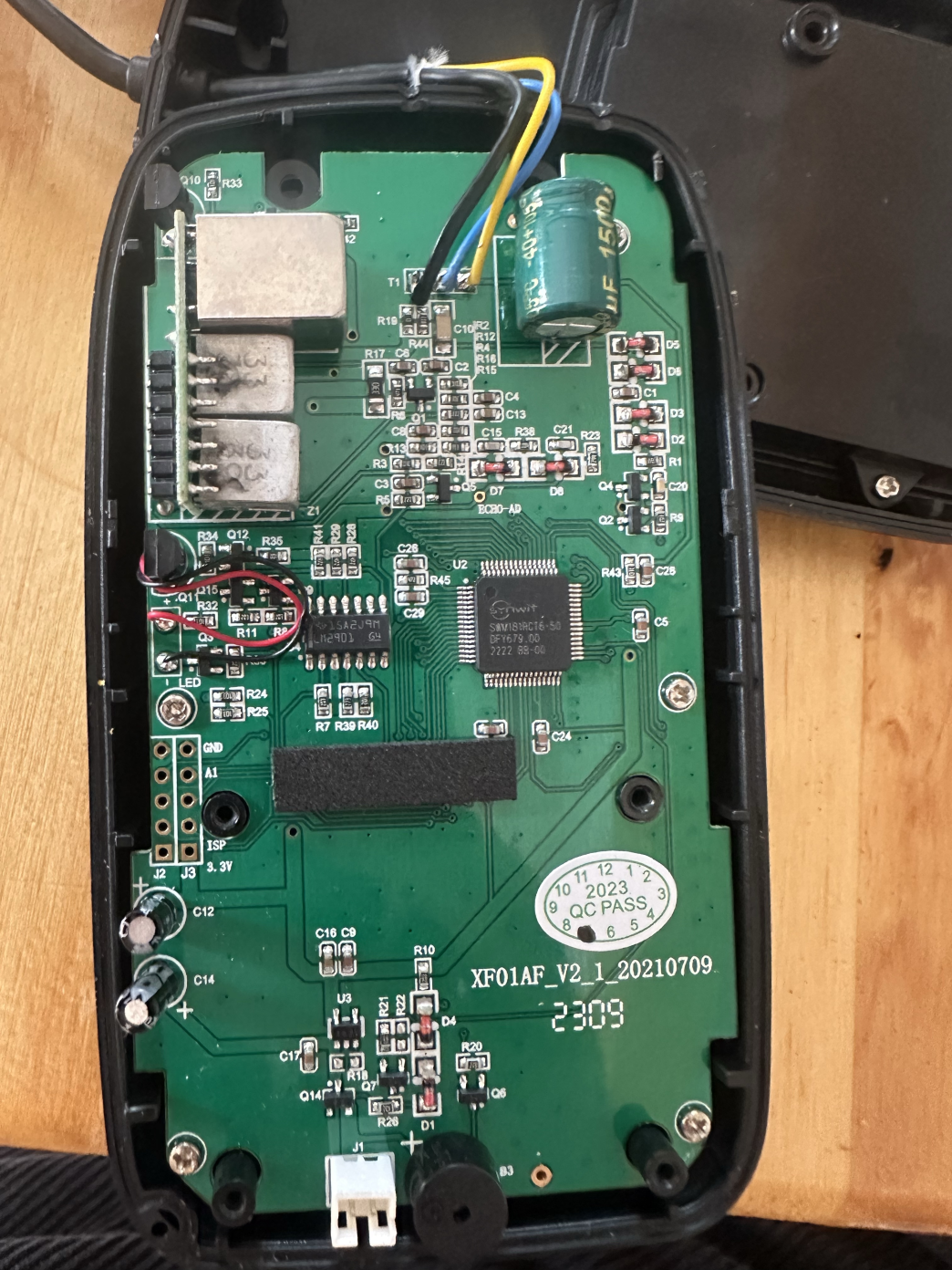
The actual board of the Venterior fishfinder under investigation. Existing photograph crop from hardware exploration in October 2026.
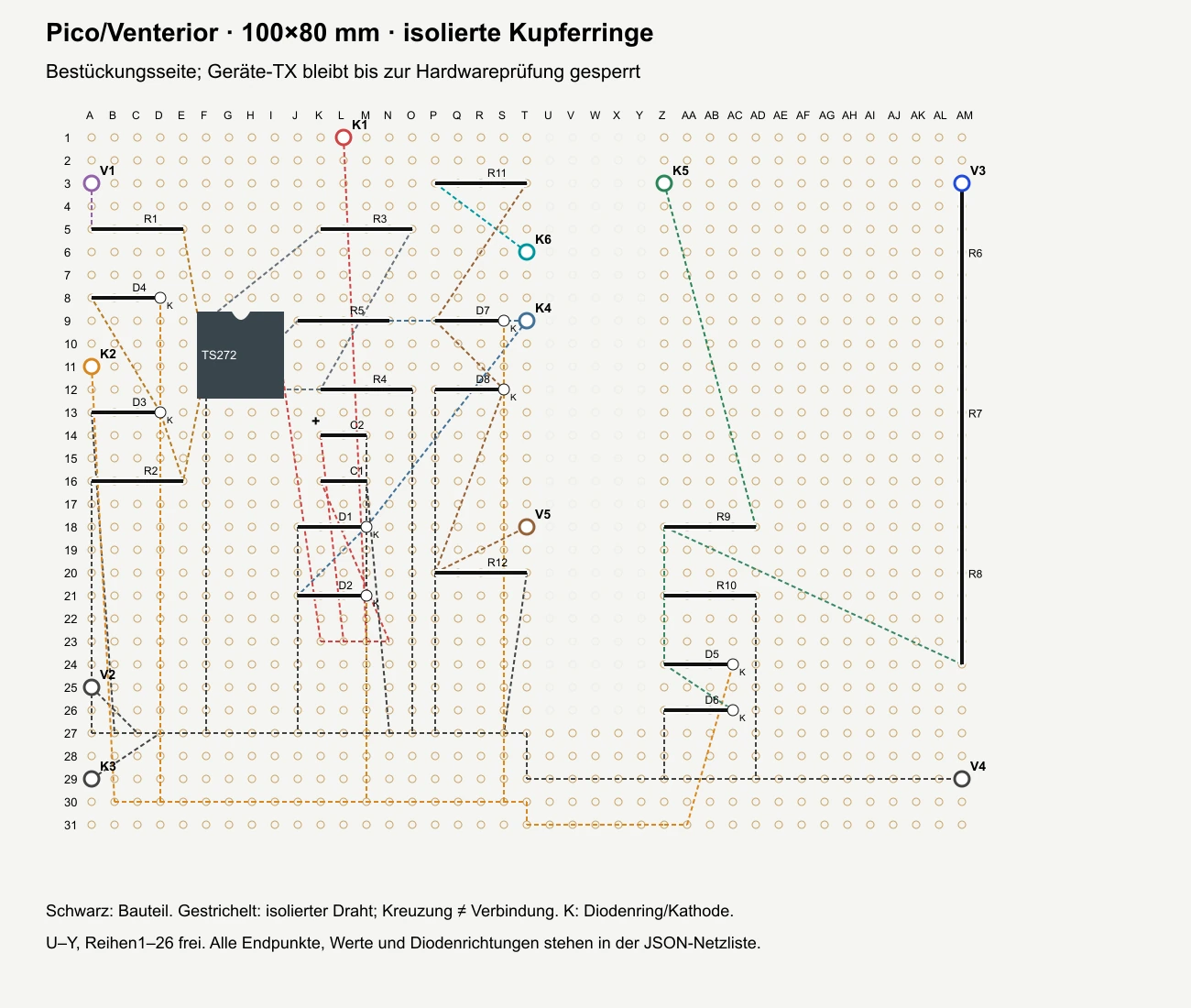
Historical own perfboard assembly plan for the Pico and transmit adapter, 14 October. Later circuit and enclosure revisions take precedence; this image is not a current wiring instruction.
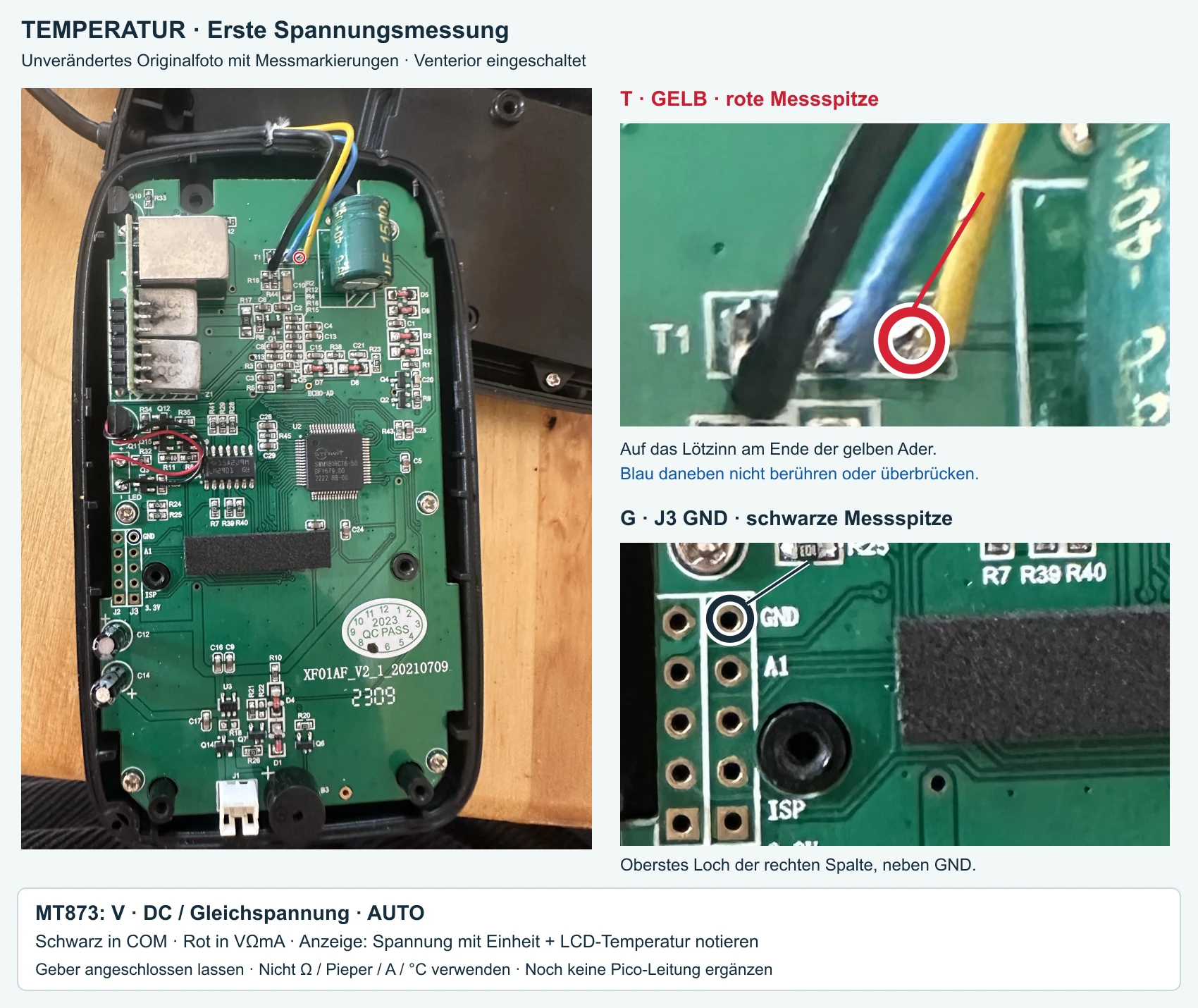
Own photographs with measurement points from temperature investigation inside the fishfinder, 18 October. The sheet documents the investigation, not a fully confirmed temperature chain through to the display.
Historical native test view with a synthetic echo track and a side A-scope for one ping. The fixture depth is not a real measurement.
04 / REPRODUCE
What you will need.
The specifically investigated Venterior model, Pico and suitable acquisition electronics
Soldering tools, measurement equipment and the wiring data for the build
The comparison was not an absolute depth calibration: the LCD read 1.1 m; the separate empirical reference was 1.25175 m.
Later endurance observations also contain failed criteria. Temperature, boat power, acoustic installation and operation underway remain separate tasks.
Here is where you can help.
We welcome help with low-noise electronics, reproducible measurements and robust installation aboard.