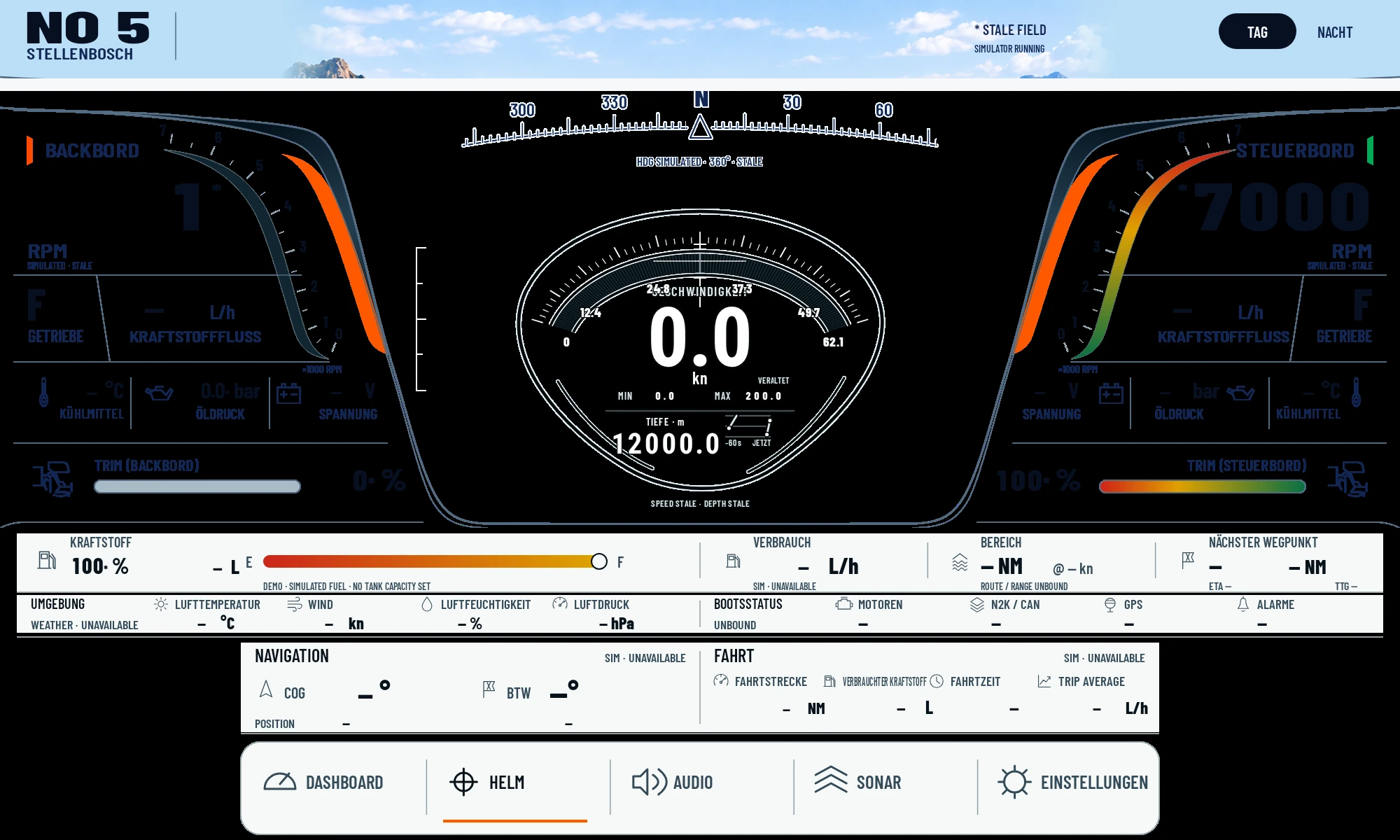
The important values at a glance. An interface made for the boat.
Native Android app · delivered to LuminaUpdated: 1 November 2026
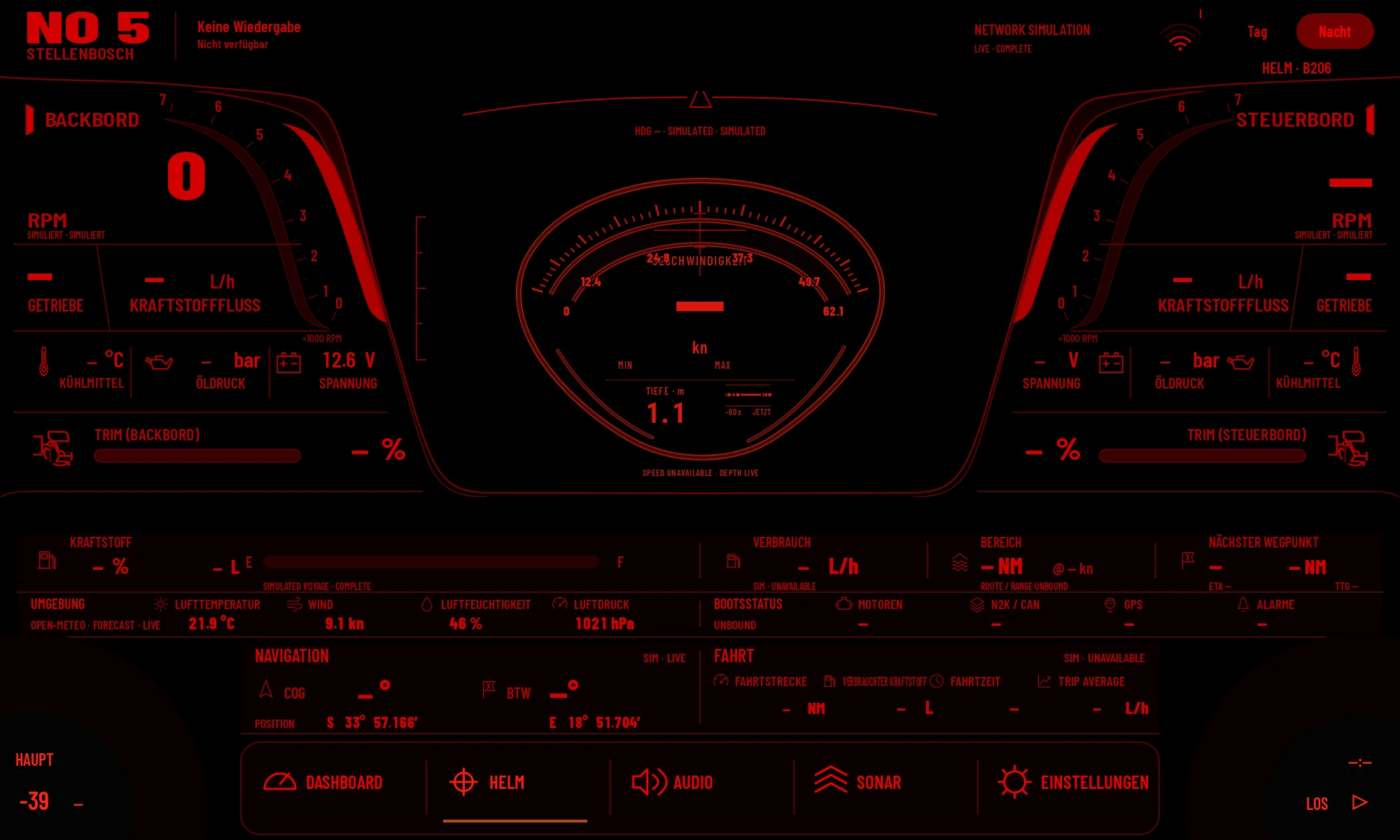
Fresh capture of the installed HELM app. Network-simulated telemetry and missing values remain visibly labelled; not captured underway.HELM 206 · 0.8.134-sonar-start-depth-controls · Lumina K706 · Android 10 · 2000 × 1200
01 / STARTING POINT
What we wanted to solve.
Speed, depth and engine data should be easy to read. A browser full of independent tools is not yet a usable helm. We wanted a coherent interface with large values, clear hierarchy and a useful night view.
WHAT THIS COMPONENT MAKES POSSIBLE
The practical difference.
Instruments adapt to the control position: consistent layouts, day and night modes, and a visible distinction between fresh, missing and stale data.
Boat data is read through existing standards and the gateway. The native interface handles presentation and controls. Current device captures show HELM 206; their boat-data header explicitly contains simulated or missing values. Earlier layout fixtures appear separately in the historical section.
Early layouts became a native Android application with separate data and display paths. It recognises missing and stale values instead of quietly replacing them with plausible numbers.
Day and red-night views, units, the shared header and Lumina interaction were brought together across several revisions.
The sonar view belongs to the same interface. Development uses explicitly identified simulators; these do not stand in for boat measurements.
03 / RESULTS
What exists today.
The source and delivery records dated 31 October 2026 document HELM 206 on both Luminas.
Instruments, audio and sonar share a native interface.
Data origin and failures remain distinguishable in the data model.
Images show the development revisions identified in their captions. Today’s source may be newer than an existing image.
CURRENT PHYSICAL DEVICE CAPTURES
The controls today.
Direct captures of the installed apps. Captions identify device, version and data source; a displayed measurement is only as strong as the source described there.
Fresh capture of the installed HELM app. Network-simulated telemetry and missing values remain visibly labelled; not captured underway.HELM 206 · 0.8.134-sonar-start-depth-controls · Lumina K706 · Android 10 · 2000 × 1200
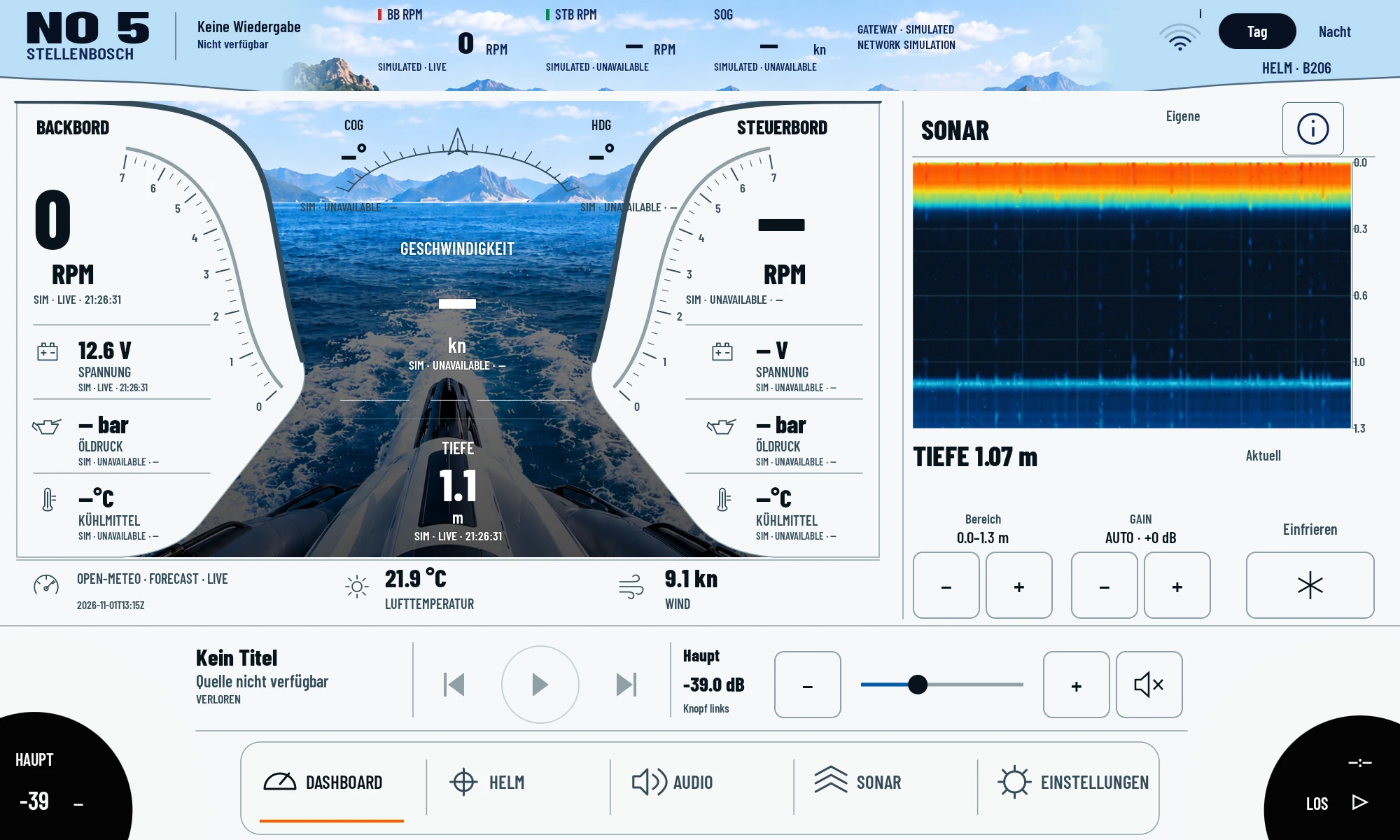
Native instruments, sonar and audio controls in one view. Sonar echoes come from the real test setup; other boat values are labelled as simulated. Playback source is not connected.HELM 206 · 0.8.134-sonar-start-depth-controls · Lumina K706 · Android 10 · 2000 × 1200
Native instruments, sonar and audio controls in one view. Sonar echoes come from the real test setup; other boat values are labelled as simulated. Playback source is not connected.HELM 206 · 0.8.134-sonar-start-depth-controls · Lumina K706 · Android 10 · 2000 × 1200
Earlier development revisions and designs +
These images explain the development journey. Historical test views and designs are separate from current device captures.
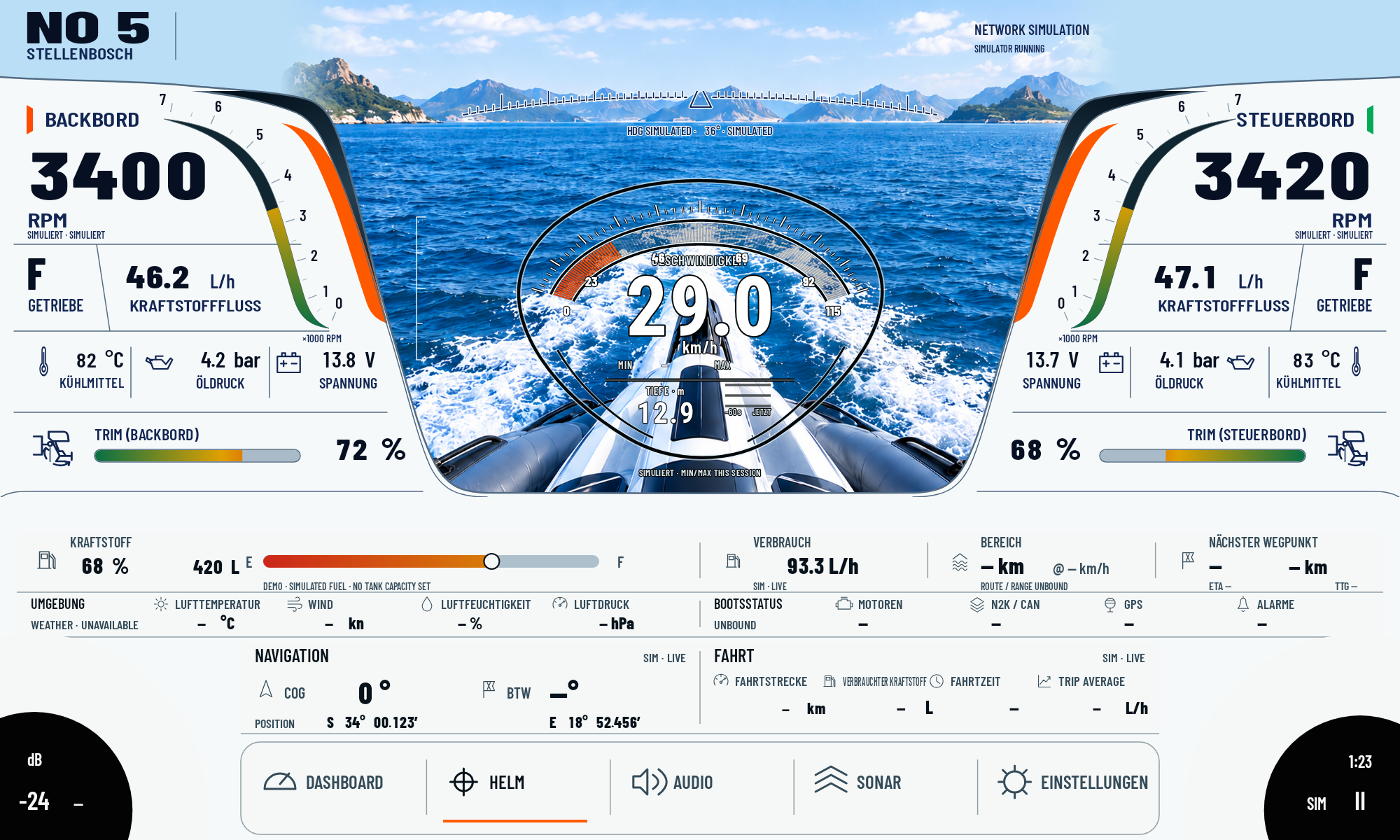
HELM with simulated boat and engine values. Historical Android test rendering; not a real sensor run.
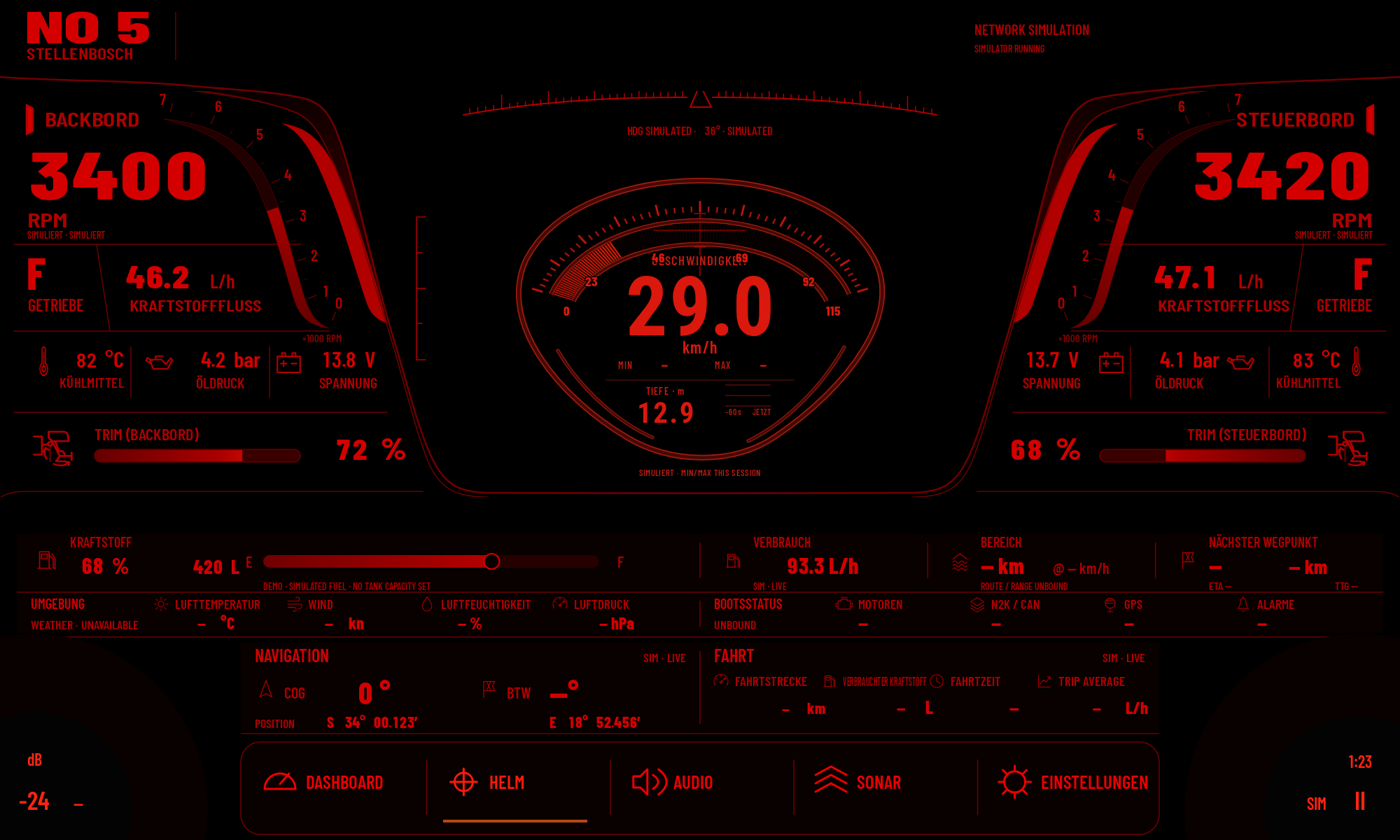
The same instrument layout in red night mode, with simulated values.
HELM test view with deliberately stale simulated data. The subdued readout belongs to the developed state handling; it does not record an engine fault.
04 / REPRODUCE
What you will need.
Android 10 or later; the tested devices are the two Luminas
A compatible gateway and real sources for deployment
For modifications: Kotlin, the Android SDK and documented build tools