01 / STARTING POINT
What we wanted to solve.
Software is easy to share. A circuit still has to fit its enclosure, a cable has to pass through a wall and a screw must be reachable. This is where a project becomes genuinely reproducible for other builders.
WHAT THIS COMPONENT MAKES POSSIBLE
The practical difference.
Sources become reproducible assemblies through suitable enclosures, wiring and mounting. People with workshop and installation experience can make a particularly valuable contribution here.
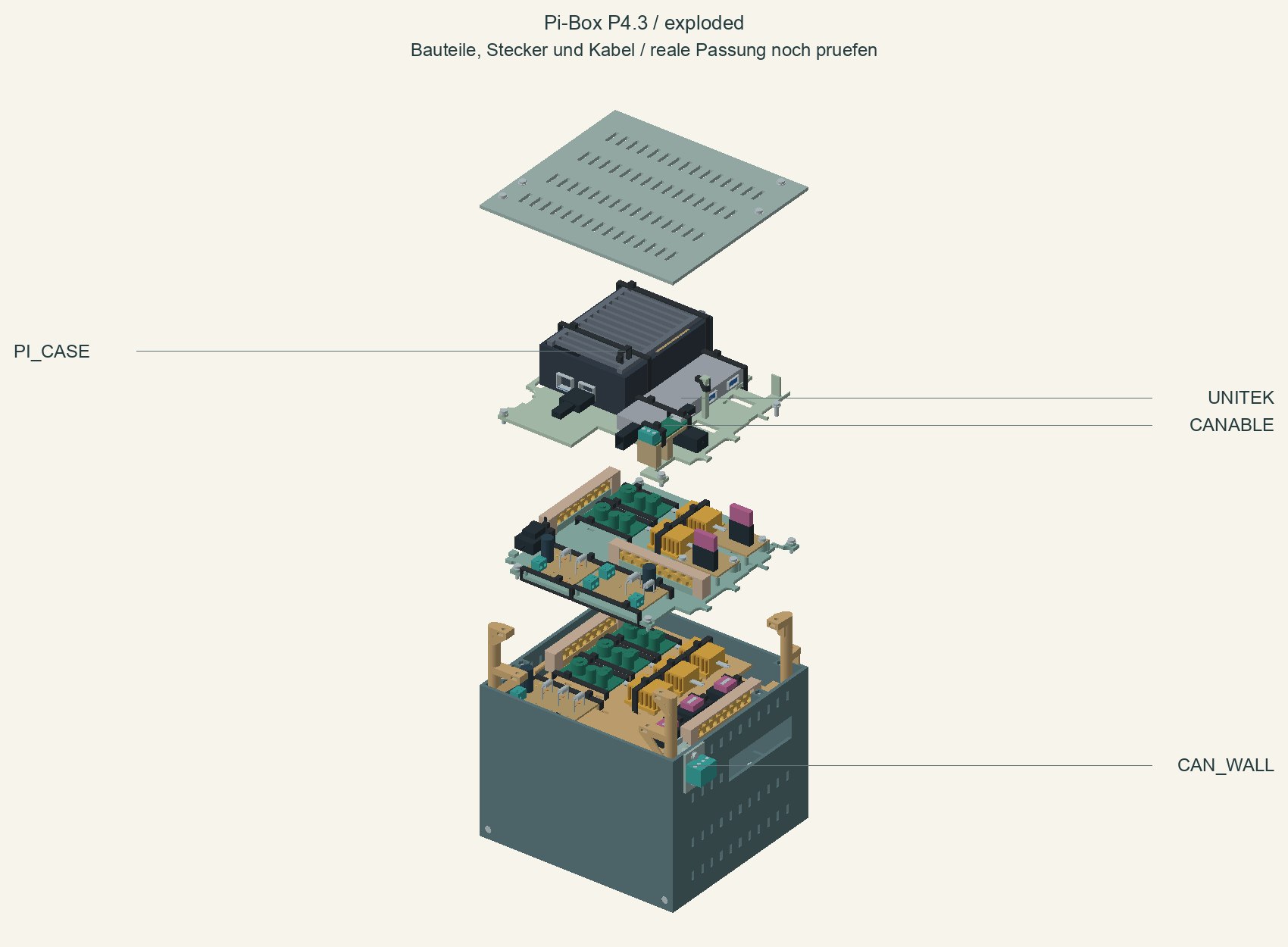
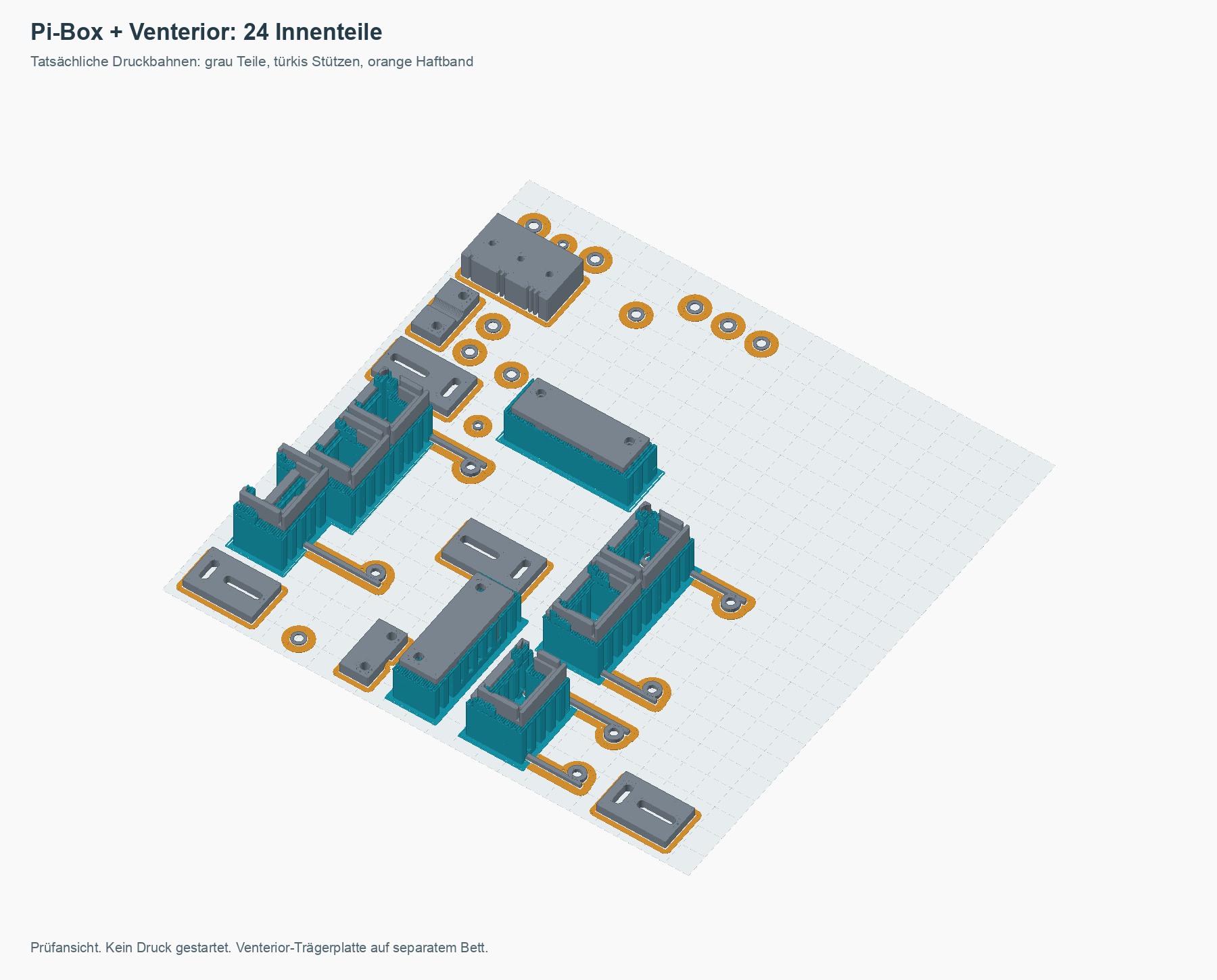
Parametric design connects electronics, external connections, mounting and maintenance paths. Print preparation from 31 October shows specific parts. Digital geometry checks, actual printing, fit checks and operation aboard are documented separately.
Read the decision in the story02 / DEVELOPMENT
Our path to getting there.
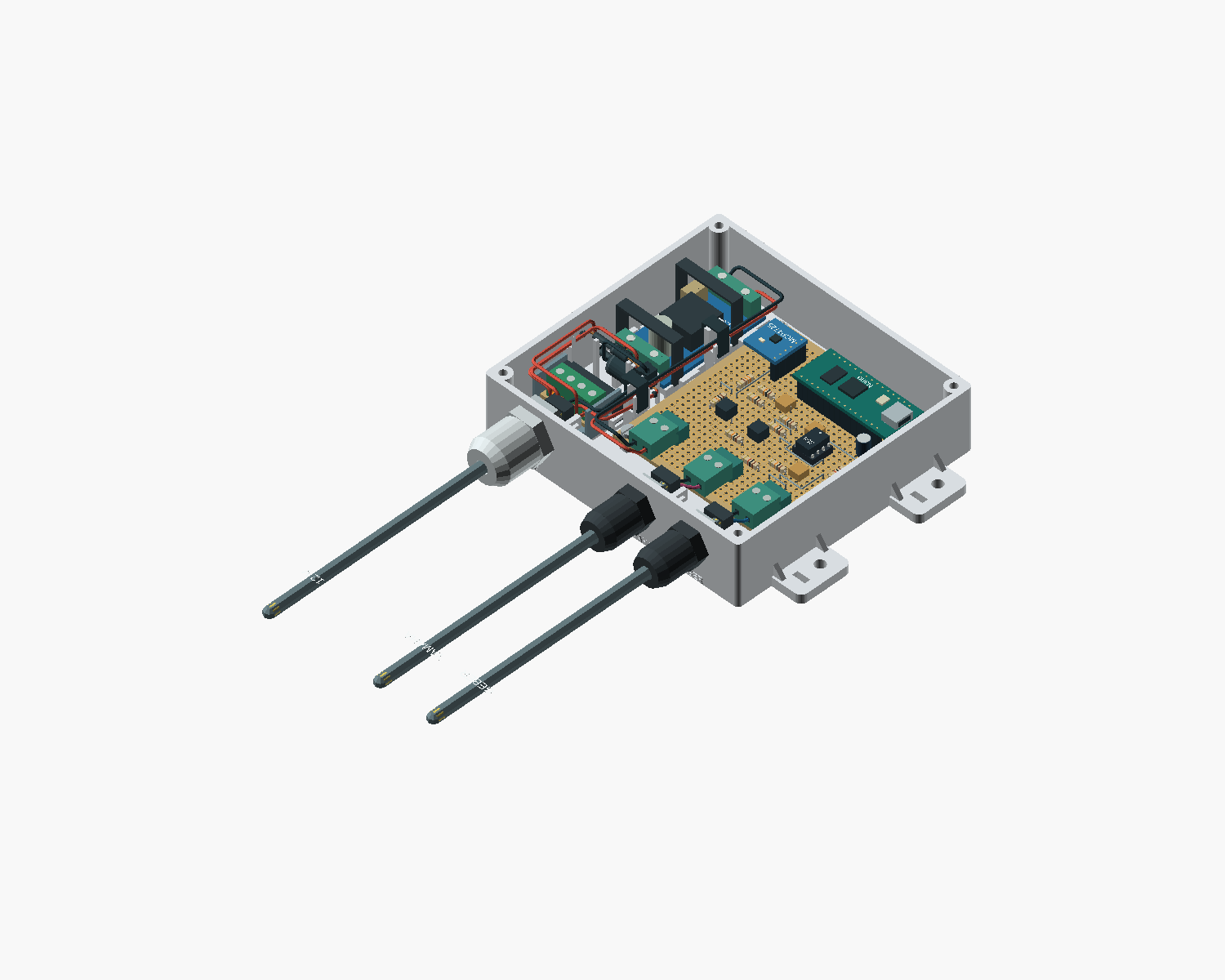
Design covers complete assemblies: bought-in parts, supports, lids, external mounting and internal wires. Print orientation is distinguished from installation orientation.
The CAD approach evolved from earlier SCAD/Fusion work to current directly generated build123d/OCCT packages. Historical and current source revisions are not conflated.
The Pi box, Venterior assembly and trim sensor need different solutions. Failed prints and assembly checks drive actual changes rather than merely new attractive renders.
03 / RESULTS
What exists today.
- Versioned designs, individual print parts and wiring records exist for multiple assemblies.
- The current Venterior revision includes closed print bodies and complete SVG wiring; physical operating checks remain separate.
- The Pi box has digital geometry checks and documented physical print problems. Both belong to the published development state.
Images show the development revisions identified in their captions. Today’s source may be newer than an existing image.